 Auto-Generated
DIY Phone Repair vs. Professional Service: An ROI Analysis for Savvy Consumers
The dread of a cracked screen or a malfunctioning device hits hard. You instinctively weigh your options: brave the world of DIY repair with online tutorials and cheap parts, or seek out a professional. The allure of saving a few bucks upfront often overshadows the potential hidden costs and frustrations that can quickly turn a simple fix into a much larger problem.
The Hidden Costs of DIY Phone Repair: More Than Just Parts
In 2026, the DIY repair trend for smartphones continues to gain traction, fueled by readily available parts and a wealth of online guides. However, what often isn't highlighted are the significant risks and hidden costs involved. While a replacement screen might seem inexpensive, the true cost of a DIY attempt can far exceed the price of a professional repair.
One of the most common pitfalls is acquiring sub-standard parts. The market is flooded with cheap, unverified components, especially for critical items like replacement screens or batteries. A 2025 study by TechInsights revealed that over 40% of aftermarket smartphone screens sold online failed quality checks within six months, leading to reduced touch sensitivity, poor color reproduction, or complete failure. Similarly, non-OEM batteries can pose significant safety risks, including overheating and swelling, which can further damage the device or even cause injury.
Beyond the parts, the complexity of modern smartphones is often underestimated. Devices are increasingly designed with intricate internal layouts, proprietary fasteners, and delicate connectors. A moment of impatience or an incorrect tool can lead to irreversible damage. For instance, attempting to replace a damages camera module without proper electrostatic discharge (ESD) precautions can permanently fry sensitive internal components. Or, a clumsy hand could easily tear a flex cable connecting the display to the logic board, turning a minor screen issue into a major, unfixable motherboard problem. Repair shops frequently encounter devices brought in by frustrated customers after a DIY attempt has worsened the original issue, often requiring more extensive and costly repairs than if they had sought professional help initially.
The Financial and Functional Fallout of Failed DIY Attempts
The financial implications of a botched DIY repair extend beyond just the cost of wasted parts. If a repair attempt renders the phone inoperable, you're left without a device, potentially necessitating the purchase of a new phone much sooner than anticipated. This immediate, unplanned expense can be significant, especially for flagship models. Furthermore, the resale value of a device that has undergone a poorly executed DIY repair plummets. Buyers are wary of devices with non-original parts or signs of tampering, impacting your ability to recoup some cost when upgrading.
Functionally, a partially successful DIY repair can still leave you with a compromised device. A poorly sealed screen replacement might lose its water resistance, leaving it vulnerable to moisture damage. Using inferior used screens can lead to ghosting, dead pixels, or a significantly reduced lifespan. Even seemingly minor components like phone speakers can be damaged or improperly reinstalled, resulting in distorted audio or complete silence. The cumulative effect is a device that no longer performs as intended, eroding the user experience and potentially leading to ongoing frustrations. Businesses, in particular, rely on fully functional devices for communication and operations; a compromised phone can lead to lost productivity and missed opportunities.
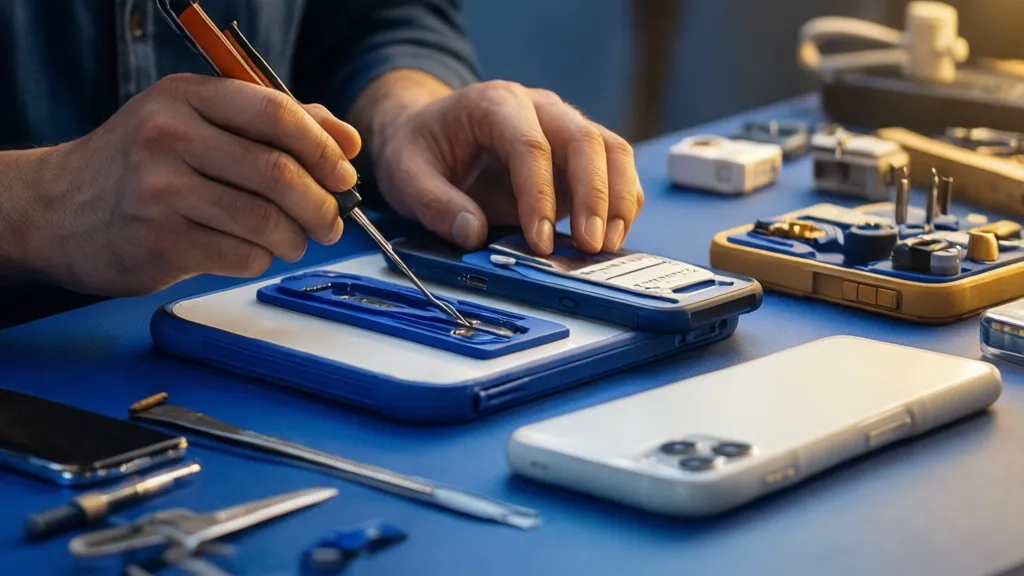
 A person attempting to repair a smartphone with small tools, looking frustrated, surrounded by tiny, delicate components.
The Smarter Approach: Prioritizing Expertise and Quality
Instead of navigating the complexities and risks of DIY, a smarter approach involves leveraging the expertise of professional repair services. These services offer several key advantages: specialized tools, trained technicians, and access to high-quality, often original equipment manufacturer (OEM) or equivalent parts.
Professional technicians have undergone extensive training and possess a deep understanding of various smartphone models and their intricate designs. They use precision tools, including those for microscopic work and soldering, which are essential for many modern repairs. Crucially, they also have access to diagnostic equipment that can accurately identify the root cause of an issue, preventing guesswork and potential further damage. This diagnostic capability is particularly vital when dealing with intermittent problems or issues that aren't immediately obvious, such as internal component failures or software glitches.
Moreover, reputable repair shops typically source their parts from trusted suppliers, ensuring quality and often providing warranties on their work and the components used. This significantly reduces the risk of premature failure and gives you peace of mind that your device is being restored to its optimal condition. For businesses, this means less downtime for employees and a more reliable fleet of devices. For individual users, it translates to a longer-lasting, fully functional phone without the headache of repeated repairs or unexpected malfunctions.
How Malam Communication Ensures Reliable Phone Solutions
Understanding the critical need for reliable and expert phone services, Malam Communication offers a comprehensive solution for individuals and phone repair shops alike. We excel in providing both brand-new phones and high-quality replacement parts, ensuring that whether you need a new device or your current one has defects, Malam Communication is your go-to partner.
Instead of gambling on unknown online sellers for replacement batteries, screens, or phone speakers, Malam Communication provides rigorously tested and certified components. Our inventory includes genuine and high-grade aftermarket parts, ensuring compatibility and durability for a wide range of devices. This commitment to quality means that when you source parts from us, you're getting components that meet stringent performance standards, reducing the likelihood of future issues and extending the life of the repaired device.
Furthermore, for those seeking a completely new device, Malam Communication offers a curated selection of the latest smartphones. This allows customers to choose from reliable, warrantied devices rather than risking the purchase of potentially compromised refurbished phones from less reputable sources. Our focus is on empowering customers to make informed decisions about their mobile technology, whether that's through a professional repair or a new purchase, all backed by our commitment to excellence.
> "The true cost of a repair isn't just the sticker price; it's the value of your time, the reliability of the fix, and the peace of mind that comes with knowing the job was done right."
 A sleek 3D illustration of a smartphone being expertly repaired by robotic arms, highlighting precision and advanced technology.
Proof: Side-by-Side Comparison
Let's look at a direct comparison between the traditional, often risky DIY approach and the more reliable professional service model.
| Feature / Aspect | Traditional DIY Methods | Professional Service (e.g., Malam Communication) |
|---|---|---|
| Parts Quality | Often unknown, cheap, unverified; high risk of failure. | High-quality, tested, often OEM or equivalent; warranties provided. |
| Technical Expertise | Relies on online tutorials; limited tools; no diagnostics. | Certified technicians; specialized tools; advanced diagnostic equipment. |
| Risk of Further Damage | High; common issues include torn cables, static damage. | Low; trained professionals minimize risk; comprehensive insurance often in place. |
| Time Investment | Significant time spent researching, ordering, attempting. | Minimal customer time; efficient service; clear timelines. |
| Warranty / Guarantee | None on parts or labor; "fix at your own risk." | Warranty on parts and labor, providing peace of mind and recourse. |
| Device Longevity | Often reduced due to sub-standard parts or poor repair. | Extended device life; restoration to optimal functionality. |
| Resale Value | Significantly diminished due to non-original parts. | Maintained or minimally impacted; professional repair is a selling point. |
| Overall Cost | Appears low initially, but high risk of hidden costs. | Transparent pricing; higher upfront cost but lower long-term total cost of ownership. |
| Data Security | DIY can involve risky data handling or exposure. | Secure handling of devices; adherence to data privacy protocols. |
 About Page
Frequently Asked Questions
Q1: Is it really that hard to replace a smartphone screen myself?
A1: While many tutorials make it seem straightforward, modern smartphone screens are complex components. They often integrate the digitizer (touch sensor) and display, are precisely glued to the frame, and connect via delicate flex cables. Without the right tools (heat gun, suction cups, spudgers, precision screwdrivers) and experience, it's very easy to crack the new screen, damage internal components like the damages camera or proximity sensor, or compromise the device's water resistance. The risk of turning a display issue into a non-functional phone is significant.Q2: How can I tell if a replacement battery is good quality?
A2: It's extremely difficult for an average consumer to verify the quality of a standalone battery. Many cheap online batteries are either old stock, refurbished, or outright fakes with lower capacities and higher safety risks. Reputable professional services, like Malam Communication, source their batteries from trusted suppliers who provide certifications and warranties, ensuring they meet safety and performance standards. Look for certifications like CE, FCC, or RoHS, and always be wary of prices that seem too good to be true.Q3: Can a DIY repair void my phone's warranty?
A3: Absolutely. Most manufacturers explicitly state that any unauthorized repair or tampering with the device will void the warranty. This means if you attempt a DIY repair and later encounter a separate issue that would normally be covered, the manufacturer will likely refuse service. This is a crucial factor to consider, especially for newer devices that still have significant warranty coverage remaining.Q4: What about replacing small components like phone speakers? Is that easier?
A4: While replacing phone speakers might seem less daunting than a screen, it still involves opening the device, disconnecting delicate connectors, and handling tiny components. There's a risk of stripping screws, damaging the speaker grille, or improperly seating the new speaker, leading to muffled or non-functional audio. Even seemingly minor repairs require a level of precision and knowledge of internal layouts that most DIYers lack, making professional service a safer bet for optimal performance.Q5: If I've already tried a DIY repair and failed, can a professional still fix it?
A5: Often, yes, but it might be more complex and costly. Professional technicians frequently see devices that have been partially disassembled or further damaged during a DIY attempt. They will need to assess the extent of the new damage in addition to the original issue. In some cases, the damage caused by a DIY attempt, such as a severed main flex cable or damaged motherboard components, can render the device irreparable or uneconomical to fix. It's always best to bring it to a professional as soon as possible after any issue arises, rather than attempting a repair yourself first.Get Your Phone Fixed Right, The First Time
Don't let the allure of a quick fix lead to greater frustration and expense. Ensure your device is in expert hands with quality parts.
Comments (0)
No comments yet. Be the first!